

AG phageCTRL
Research field
Antimicrobial resistance (AMR) and, in particular, multidrug-resistant bacterial pathogens pose a growing challenge to public health worldwide. At the same time, there is an urgent need for new strategies to prevent and treat bacterial infections. The development of innovative antibacterial treatment options is therefore one of the research areas prioritized by the World Health Organization (WHO).
Bacteriophages—or phages for short—are viruses that can specifically recognize and infect bacteria. Many phages cause lysis of their host cells and can selectively kill bacteria. Although research into the therapeutic use of phages has been ongoing for more than 100 years, it initially took a back seat with the successful introduction of antibiotics. However, the increasing prevalence of antibiotic-resistant pathogens and the limited availability of new, effective antibiotics have significantly reignited interest in phages.
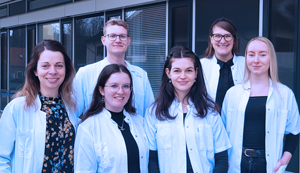
At the phageCTRL (phageConTRoL) research group at the Institute of Medical Microbiology, Virology, and Hygiene at the University Medical Center Rostock, we isolate novel bacteriophages, investigate their properties, develop phage testing methods suitable for routine laboratory use, and explore new ways to harness their potential for medical applications.
Research topics
Our research combines basic research, diagnostics, and applied development with a focus on three key areas:
01 | Phage Isolation – Phage Characterization – Phage Bank
Establishment and characterization of a quality-assured collection of lytic phages against clinically relevant bacterial pathogens as a foundation for future biomedical applications.
02 | Standardization of Phage Testing
Development and standardization of practical methods for determining phage susceptibility—with the goal of integrating phage-specific testing into routine microbiological diagnostics.
While antimicrobial susceptibility testing (AST) for bacteria is already standard practice in routine diagnostics, internationally recognized methods for testing phage susceptibility are still lacking. A key focus of current research is the development of a standardized phage susceptibility test suitable for routine use that is both easy to perform and cost-effective. We have already published a promising test design. As part of a national interlaboratory comparison, the methodology has now been evaluated throughout Germany. In doing so, we are supporting the ongoing efforts of the EUCAST Subcommittee on Phage Susceptibility Testing, which is currently working on the development of standardized methods. Furthermore, various methods are currently being evaluated that can be used for the development of a ready-to-use test kit. This will further simplify the introduction of this testing method into microbiological diagnostic laboratories.
Current: Seeking Routine Laboratories for an Interlaboratory Test on Anaerobic Phage Testing!
For a proficiency inter-laboratory comparison in the fourth quarter of 2026, we are seeking routine laboratories interested in testing the susceptibility of bacteria to anaerobic phages.
Prior experience with phage testing is not required. A prerequisite for participation is having established procedures for plate-based agar diffusion testing according to EUCAST or CLSI.
Interested? We look forward to your participation!
03 | Phage-Functionalized Biomaterials
Development of innovative strategies for utilizing phages, for example, through the functionalization of biomedical surfaces and the development of phage-based coatings for medical materials.
Our goal
We aim to translate scientific findings on bacteriophages into standardizable and application-oriented solutions for medicine, thereby creating new perspectives for managing bacterial infections and antimicrobial resistance.
AG phageCTRL
Group Leader

Dr. rer. hum.
Katharina Ekat
- Wissenschaftlerin
am Institut für Medizinische Mikrobiologie, Virologie und Hygiene
+49 (0) 381 494 5957
+49 (0) 381 494 5948
+49 (0) 381 494 5902
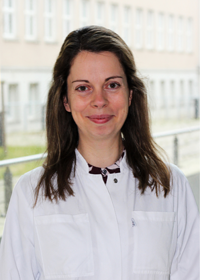
Dr. med.
Romy Skusa
- Ärztin
am Institut für Medizinische Mikrobiologie, Virologie und Hygiene
+49 (0) 381 494 5943
+49 (0) 381 494 5913
+49 (0) 381 494 5902
Team
AG phageCTRL - Team

Dr. rer. hum.
Katharina Ekat
- Wissenschaftlerin
am Institut für Medizinische Mikrobiologie, Virologie und Hygiene
+49 (0) 381 494 5957
+49 (0) 381 494 5948
+49 (0) 381 494 5902
Dr. med.
Romy Skusa
- Ärztin
am Institut für Medizinische Mikrobiologie, Virologie und Hygiene
+49 (0) 381 494 5943
+49 (0) 381 494 5913
+49 (0) 381 494 5902
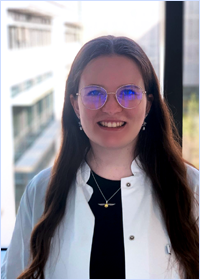
Paula Maria Gurgel
- Studentische Hilfskraft (HiWi)
am Institut für Medizinische Mikrobiologie, Virologie und Hygiene
+49 (0) 381 494 5939
+49 (0) 381 494 5948
+49 (0) 381 494 5902

Julia Marcinek
- Masterstudentin
am Institut für Medizinische Mikrobiologie, Virologie und Hygiene
+49 (0) 381 494 5939
+49 (0) 381 494 5948
+49 (0) 381 494 5902
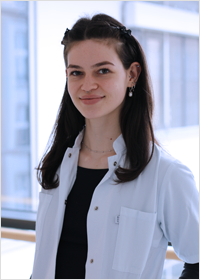
Lotte Scharnagl
- PhD Studentin
am Institut für Medizinische Mikrobiologie, Virologie und Hygiene
+49 (0) 381 494 5939
+49 (0) 381 494 5948
+49 (0) 381 494 5902
Sonstiges
Memberships
Memberships
- Deutsches Zentrum für Infektionsforschung (DZIF) TransPhageNet
- European Society of Clinical Microbiology and Infectious Diseases (ESCMID) Study Group for Non-Traditional Antibacterial Therapy (ESGNTA)
- Deutsche Gesellschaft für Hygiene und Mikrobiologie (DGHM)
- American Society for Microbiology (ASM)
- European Society for Biomaterials (ESB)